Field Notes: Winter Birds at Brandon Marsh
A visit to Brandon Marsh offered a quiet but rewarding set of moments, shaped by patience rather than spectacle. Winter birding often works this way, with long periods of stillness punctuated by brief, purposeful activity.
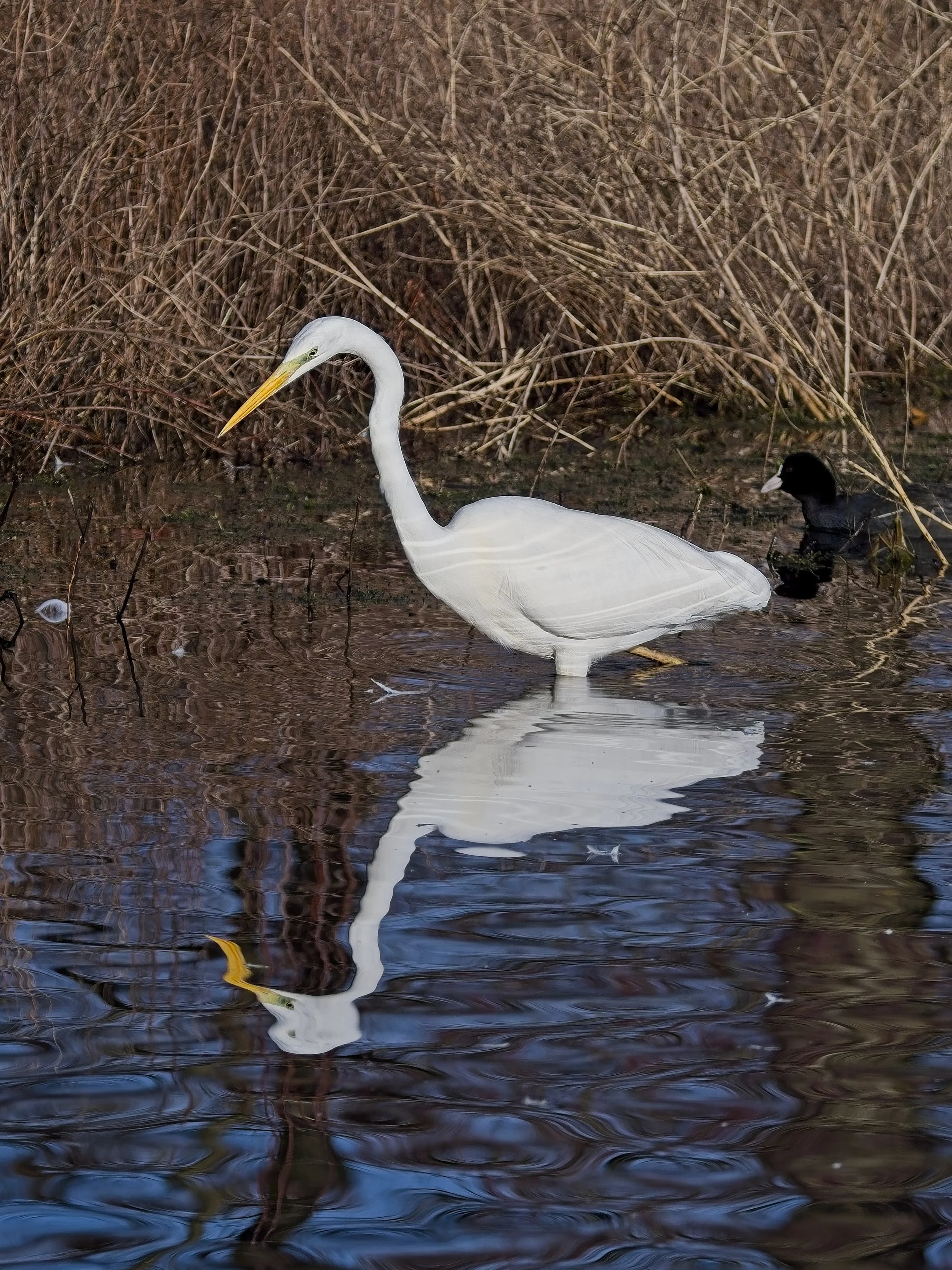
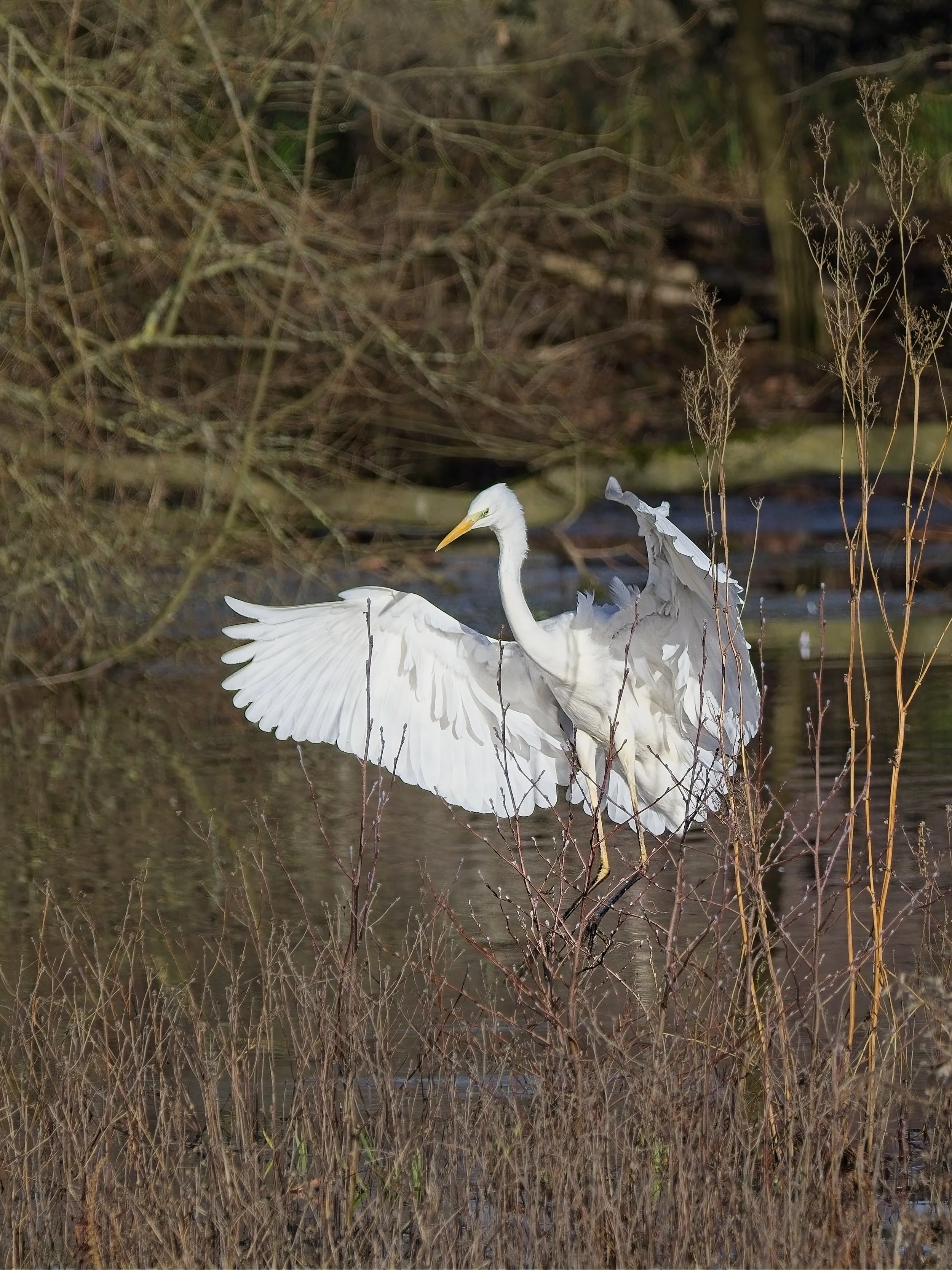
One of the highlights of the walk was a white egret working its way slowly along the water’s edge. It moved with deliberate care, pausing for long stretches before taking a few measured steps forward. The search for food was unhurried, almost methodical, as it scanned the shallows. After some time, and without much drama, it lifted off and moved on, leaving the water empty again.
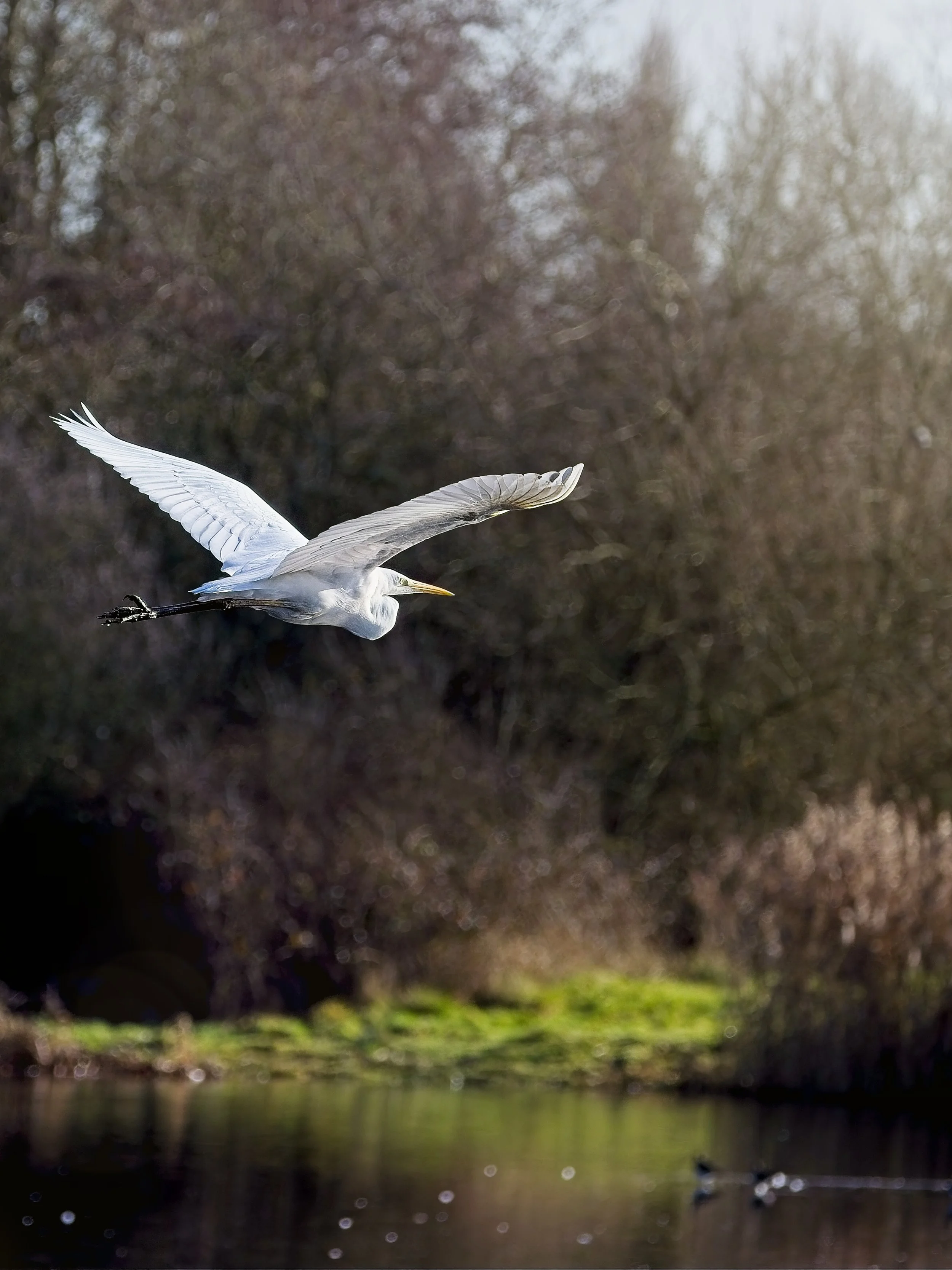
Further out over the pools, gulls were more active. Small groups passed through in flight, their movement cutting across the otherwise calm scene. Against the winter sky, they added energy and contrast, reminding me how dynamic these wetlands can be even when the water itself appears still.
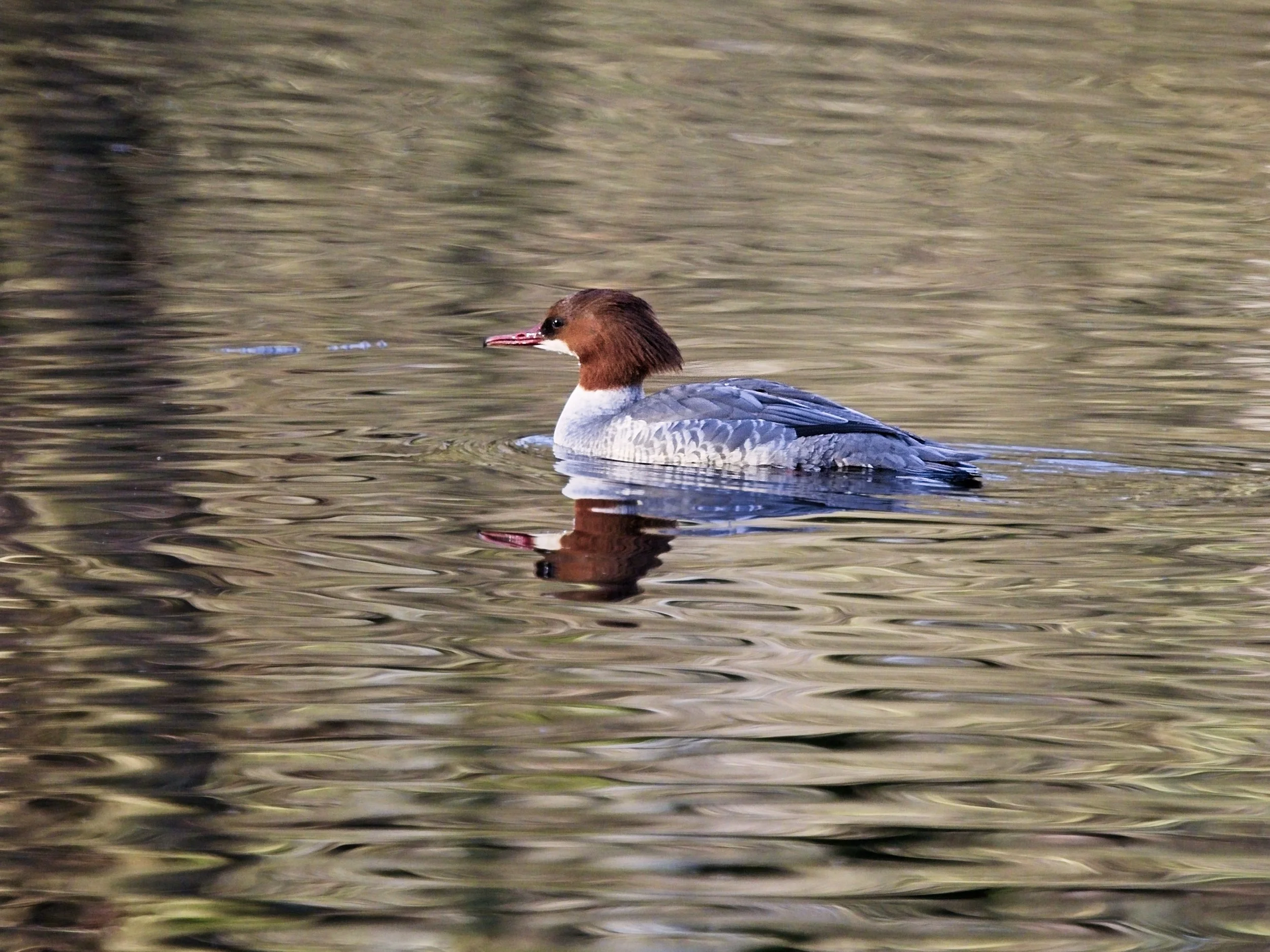
A female goosander was also present, sitting low in the water and largely keeping to herself. Compared to the egret and the gulls, her behaviour was understated. She drifted quietly, occasionally shifting position, blending into the muted tones of the wetland. It was a subtle sighting, but one that fits well with the character of winter at Brandon Marsh.
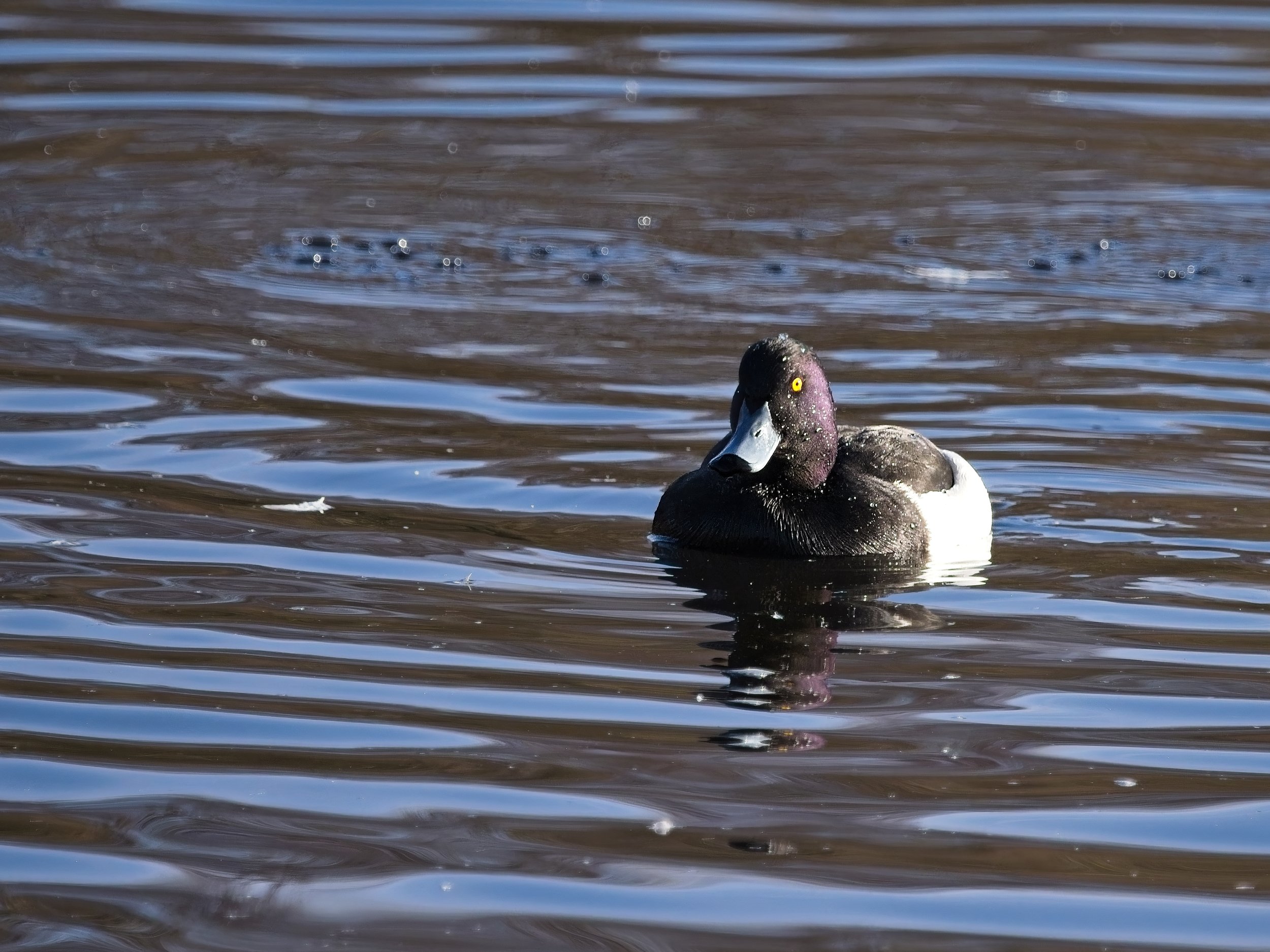
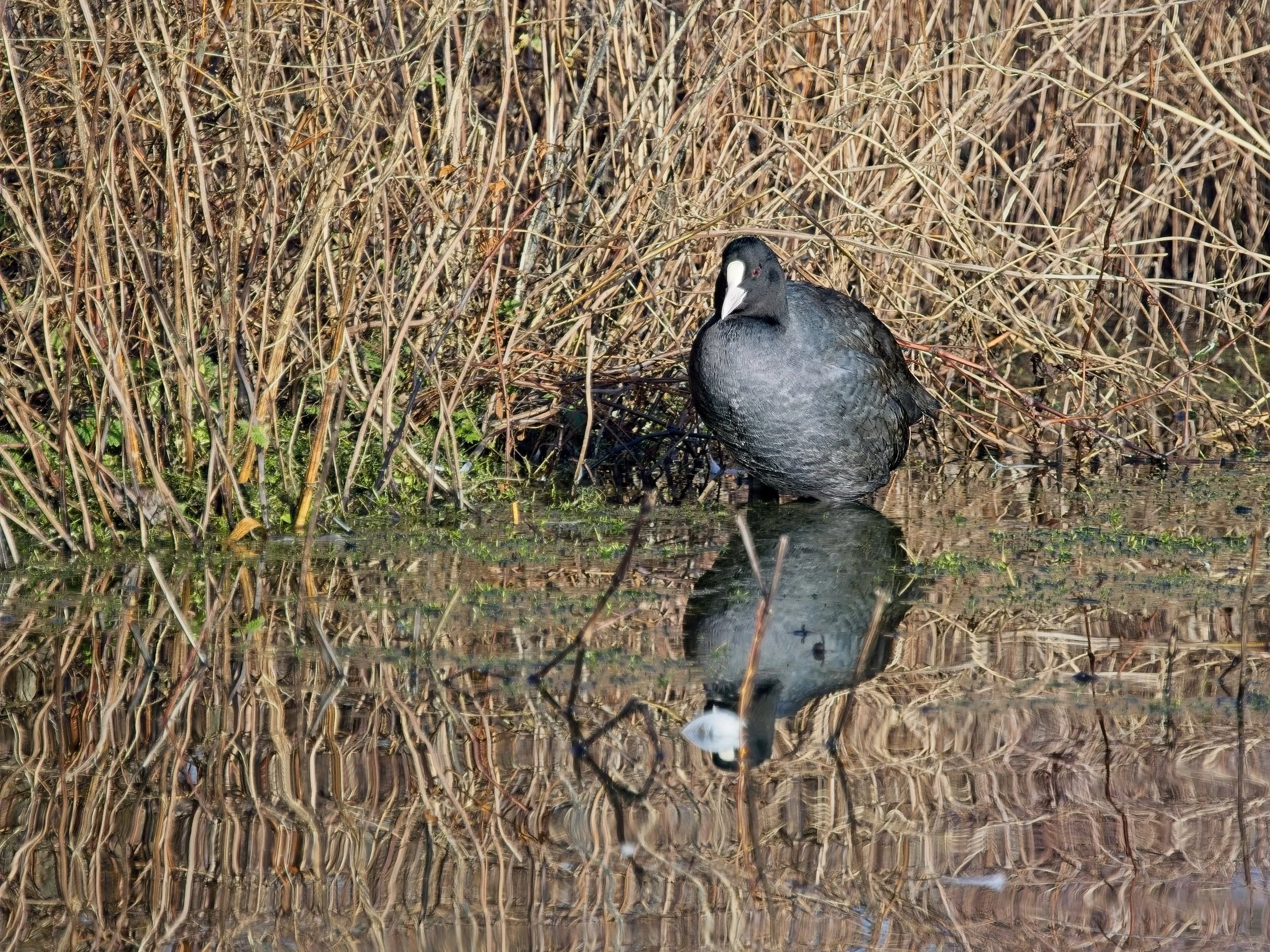
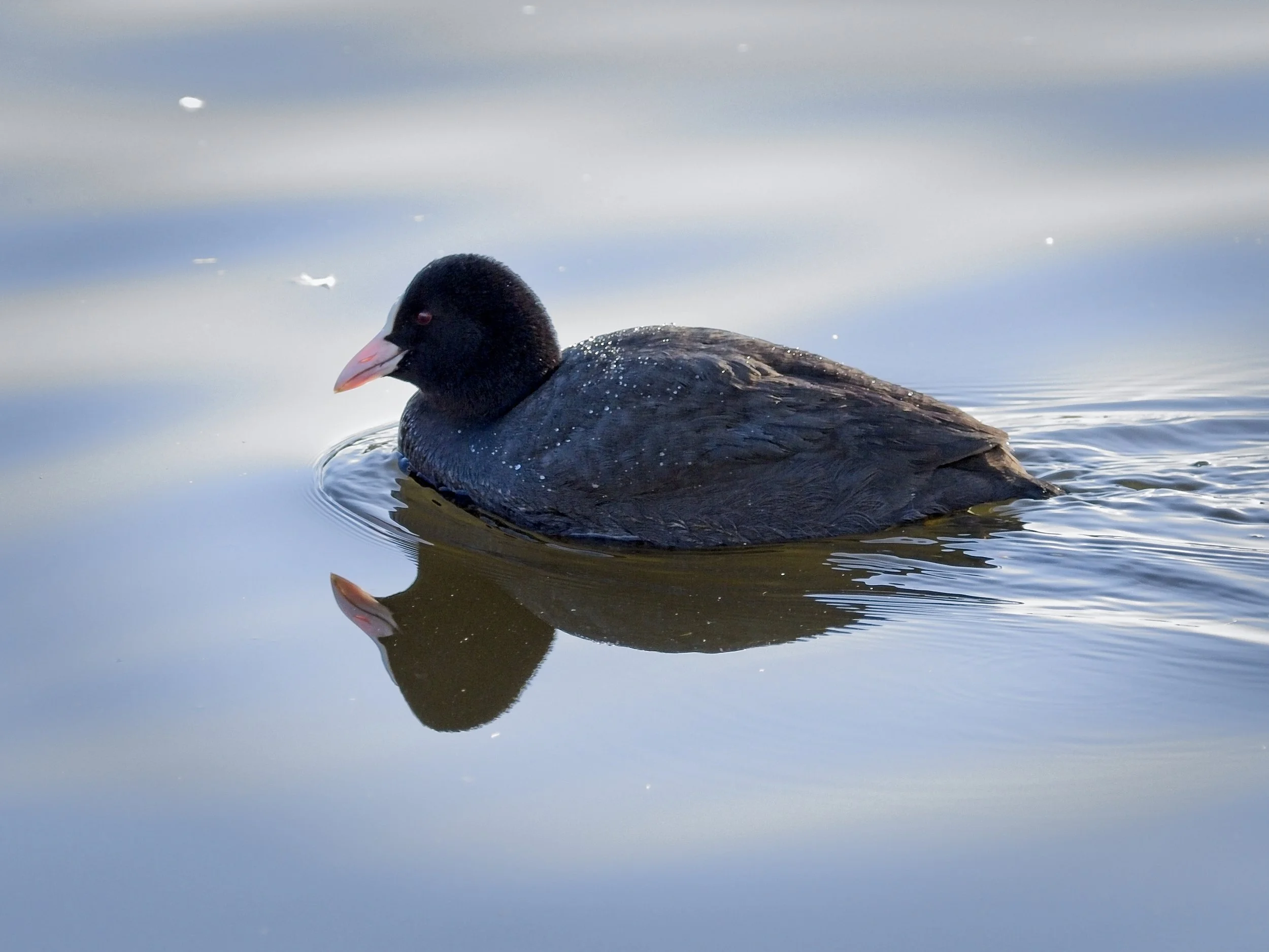
What ties these observations together is restraint. There was no sudden abundance of species, no dramatic interactions. Instead, the visit offered a series of calm, self-contained moments. Each bird was doing exactly what it needed to do, using the wetland in different ways and on its own terms.
Photographically, this made the session about timing and awareness rather than volume. Waiting for the egret to move, catching the gulls in flight, and noticing the goosander among the water all required slowing down and paying attention to small changes in behaviour.
Brandon Marsh continues to demonstrate why wetlands are so important in winter. Even when activity seems minimal, these places provide food, shelter and space for a wide range of species. Some visits are busy and noisy. Others, like this one, are quieter, but no less valuable.
This walk adds another small chapter to my ongoing documentation of wetland birds in the Midlands, reinforcing the value of returning to the same sites repeatedly and allowing the seasons to shape what is seen.