Field Notes: Walking the River Itchen Near Long Itchington
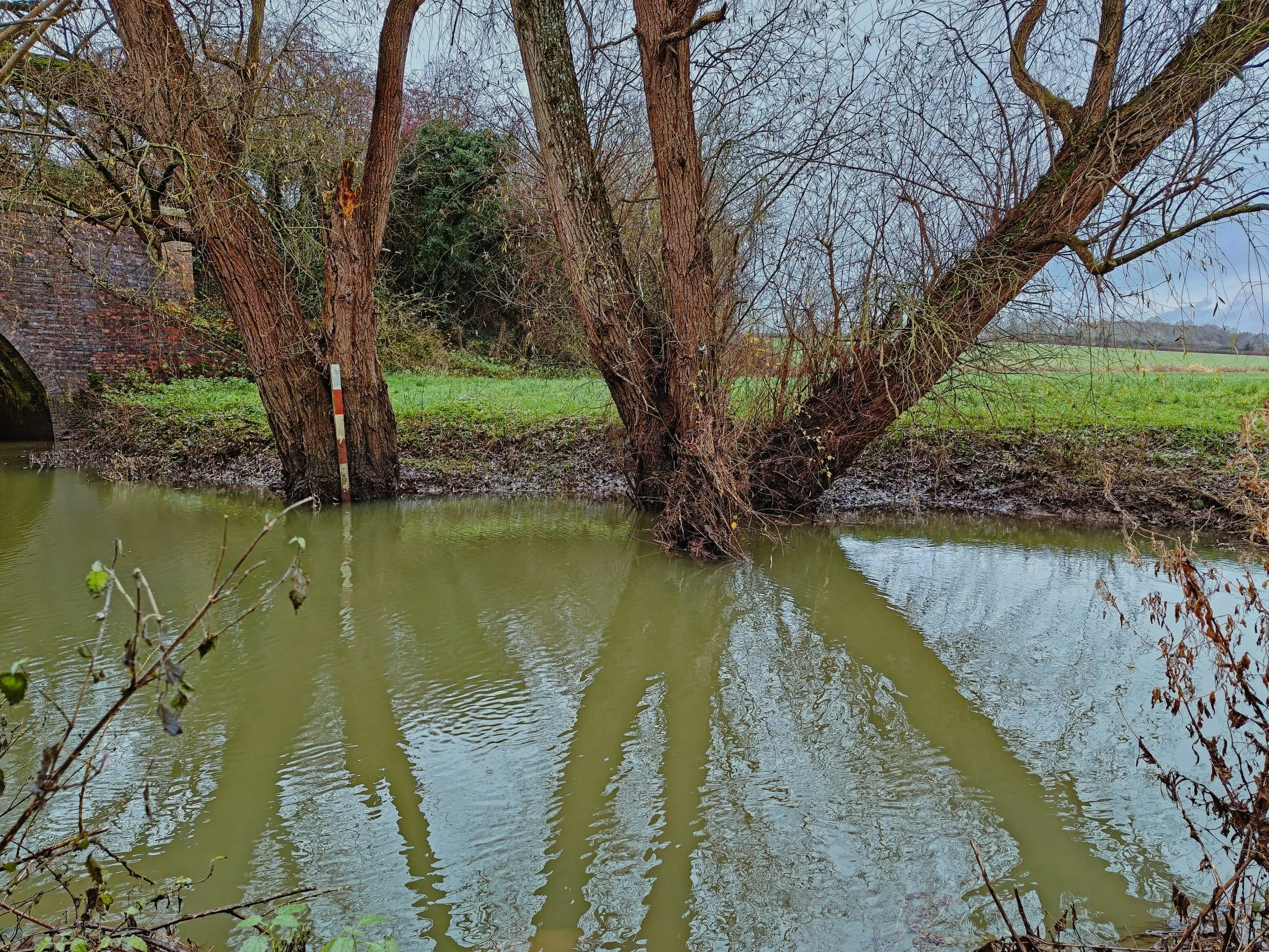
A walk along the River Itchen near Long Itchington feels like a moment caught between seasons. Despite it being well into winter, pockets of autumn colour still linger along the banks. Golds and muted reds remain in the trees and hedgerows, adding warmth to an otherwise subdued landscape.
One of the most noticeable features on this visit was the sound. Birdsong was abundant for the time of year, with small birds moving constantly through scrub and low branches along the river corridor. The river provides shelter and structure, and even in quieter months it remains an active space for wildlife.
The water itself told a different story. Recent high flows were evident, and although levels had dropped back since their peak, the river remained unsettled. The water was unclear in many places, carrying fine sediment stirred up by faster flow rates upstream. Surface patterns showed strong movement, and submerged features were difficult to make out, a clear sign of recent disturbance within the channel.
Along the route, there was clear evidence of the impact these higher flows had had on the banks. In several areas, vegetation had been flattened or torn away, leaving exposed soil and damaged root systems. Sections of the bank showed signs of erosion where water had overtopped or scoured the edges, particularly in tighter bends and narrower stretches.
From a river health perspective, this kind of change is not unexpected. Higher flow events redistribute sediment, reshape banks and temporarily disrupt plant communities. While this can create short-term damage to vegetation, it is also part of the natural process by which rivers adjust to changing conditions. The concern arises where banks are already weakened or constrained, increasing the risk of longer-term erosion.
Photographing the river on this walk was about capturing these contrasts. Lingering autumn colour alongside disturbed water. Active birdsong set against exposed banks and broken stems. The images reflect a river in transition rather than one at rest.
This stretch of the Itchen offers a useful reminder that river health is dynamic. It cannot be judged from a single visit or a single condition. Water clarity, bank stability and vegetation cover all change in response to weather, season and flow.
As part of my ongoing work documenting local rivers, returning to places like this allows those changes to be recorded over time. Each walk adds another layer to the story, helping to build a more honest picture of how small rivers in the Midlands respond to pressure and recover between events.