Field Notes: Walking the Grand Union Canal between Napton and Stockton
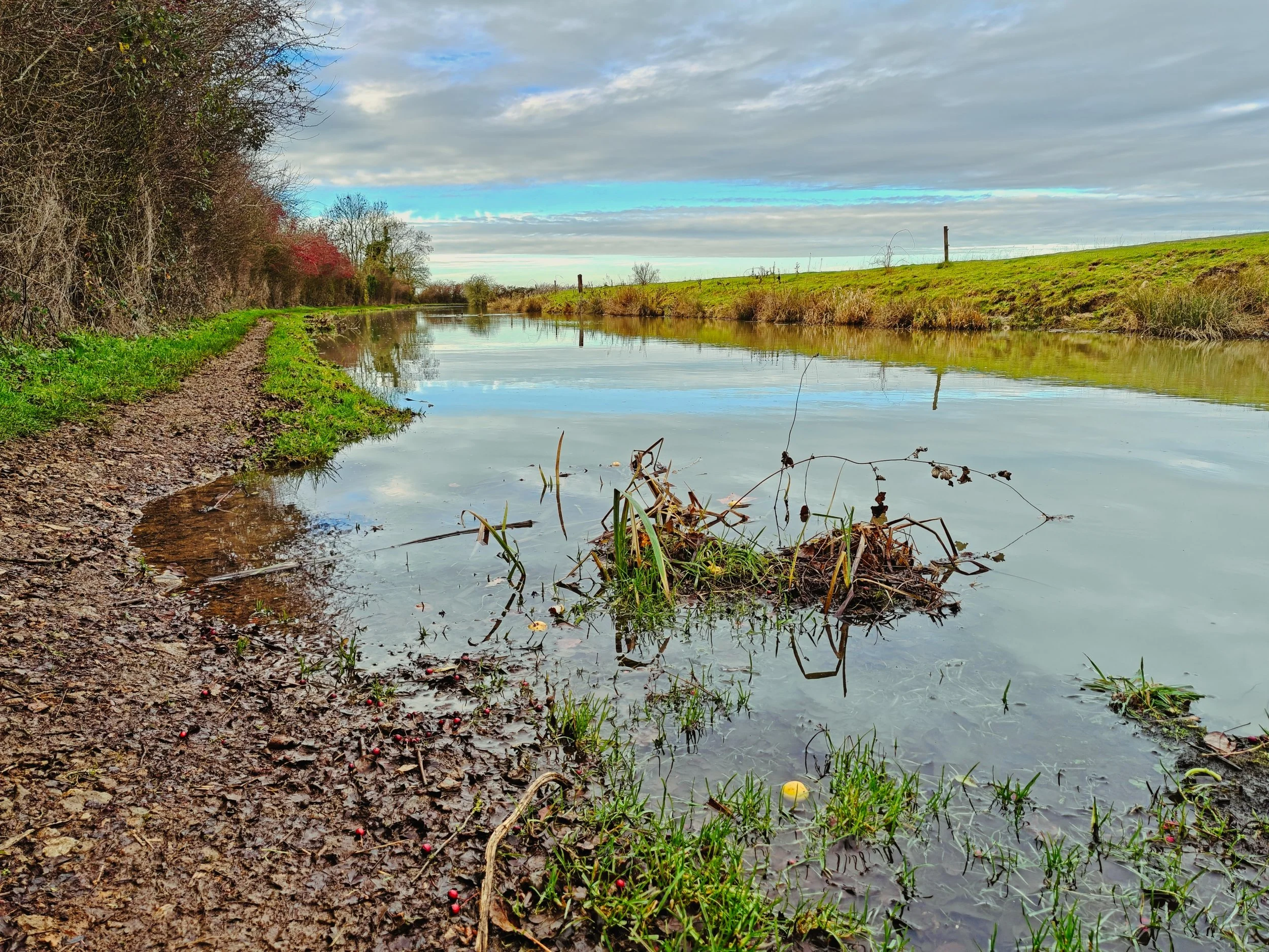
A winter walk along the Grand Union Canal between Napton and Stockton offers a clear view of how much quiet work goes into keeping this stretch of waterway usable and stable. At first glance, the canal feels calm and well cared for, but closer inspection of the towpath edges reveals signs of recent intervention and long-term pressure.
Along several sections of the route, the towpath has been visibly strengthened. The edges are more defined, surfaces are level and firm underfoot, and areas that would once have been vulnerable to collapse now appear stable. These improvements are not decorative. They reflect targeted repair work carried out to address ongoing bank erosion, much of it linked to the presence of signal crayfish.
Signal crayfish are an invasive species known for burrowing into canal banks, weakening them from below. Over time, this leads to slumping edges and sudden collapses, particularly where towpaths are heavily used. On this walk, the evidence of that past damage is still visible in places, but it is equally clear that sections have been reinforced and rebuilt to prevent further deterioration.
What is striking is how well the completed work now blends into the landscape. Reinforced banks sit naturally alongside the canal, allowing vegetation to re-establish and wildlife to continue using the corridor. Ducks move quietly along the margins, swans occupy wider pools, and cormorants perch nearby, largely unaffected by the work that has taken place beneath their feet.
From a conservation point of view, this stretch of canal highlights the balance between maintaining access and protecting ecological function. The Grand Union is not just a historic structure or a recreational route. It is a living system that supports a wide range of species while also carrying the pressures of invasive wildlife and constant human use.
Photographing this section of the canal was as much about observation as image-making. Subtle details tell the story: the shape of the bank, the angle of the towpath edge, the way water meets land. These are quiet indicators of the challenges facing canals across the Midlands and the effort required to keep them resilient.
Walking between Napton and Stockton reinforces the importance of long-term maintenance rather than short-term fixes. The improvements seen here show what careful planning and sustained work can achieve, even in the face of ongoing pressures like signal crayfish activity.
This stretch of the Grand Union stands as an example of how intervention, when done well, can protect both access and habitat, ensuring that canals remain valuable wildlife corridors and public spaces for years to come.